Children's orthodontics in Madrid
Invisalign First for children
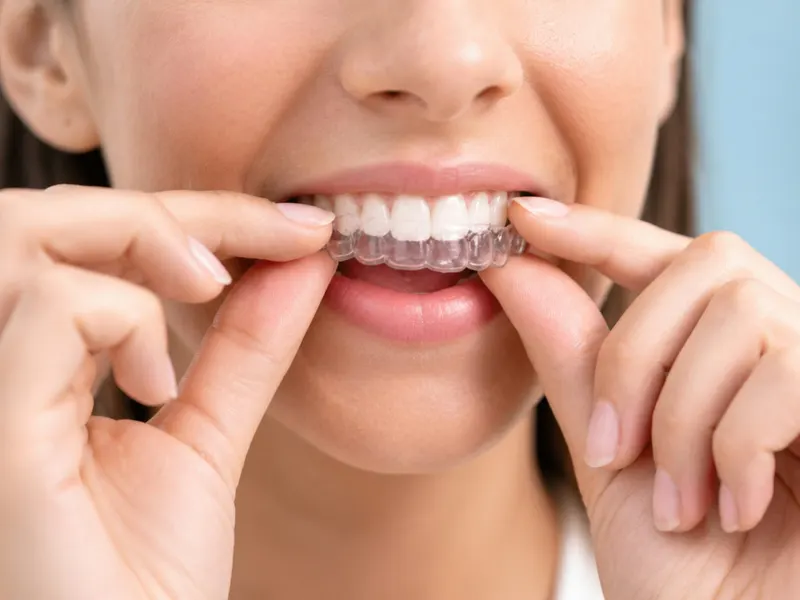
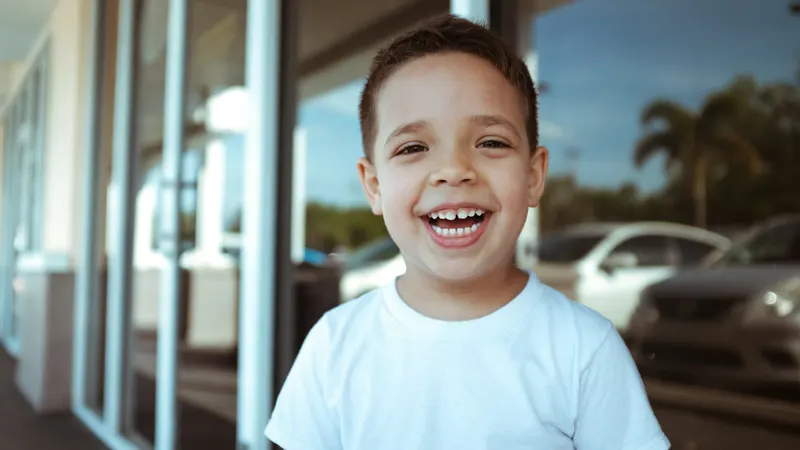
Orthodontics with clear aligners for children from age 6. It guides the growth of the jaws and straightens the teeth with a discreet appliance that does not affect speech, at school too.
Age
From age 6
Duration
Around 12 to 18 months
Daily wear
About 22 hours
Check-ups
Every 6 to 8 weeks
At school
No change in speech
Approximate figures. They are confirmed at the first visit for each child.
The treatment
What does it involve?
Invisalign First is the version of Invisalign designed for children who still have a mix of baby and permanent teeth. It uses clear aligners made to measure that are changed every one or two weeks.
As well as straightening the teeth, they can widen the arch to make room for the permanent teeth and correct the bite while the bones are still growing. It replaces conventional removable appliances, which are bulky and which many children find hard to tolerate.
Why start early
Treating some problems in time, while the face is growing, can make later orthodontic treatment simpler or shorter. Not every child needs it: Dr Ruiz will tell you whether to start now or wait.

Indications
When is it recommended?
- Lack of space for the permanent teeth.
- Narrow palate or crossbite.
- Front teeth tilted strongly outwards.
- Open bite, sometimes caused by a dummy or thumb sucking.
- Teeth coming through crooked or with gaps.
When it is better to wait
If the problems will not get worse as the child grows, it is sometimes better to keep monitoring and start later. For treatment to work, the child has to wear the aligners about 22 hours a day, so parents' help is important.
Before you decide
The first visit
The first visit is calm and unhurried. Dr Ruiz gets to know your son or daughter, explains what he sees and whether it is the right time to start.
01
Getting to know your child
How they eat and breathe, whether they use a dummy and what worries you about their teeth.
02
Scanning without moulds
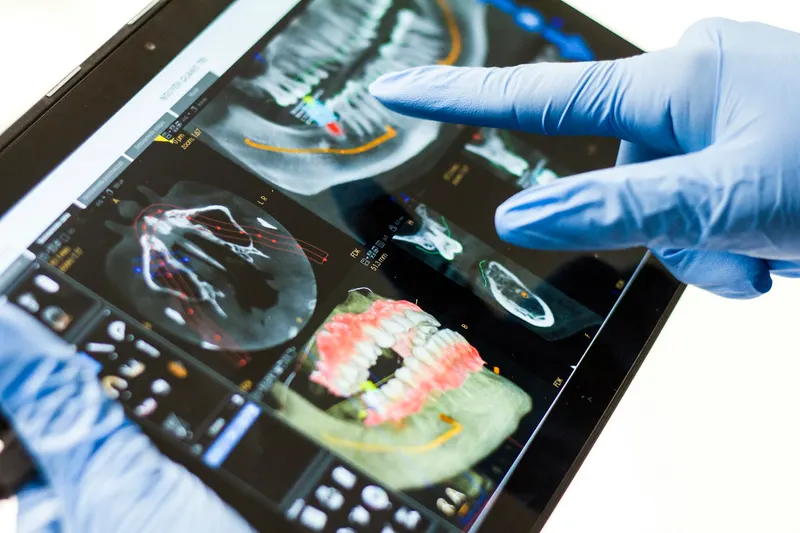
Examination and a quick 3D scan with iTero, without gagging, and an X-ray if needed.
03
Seeing the plan
An on-screen simulation of how their teeth will move and how the bite will end up.
04
Deciding as a family
You take home the plan, the estimated duration and a no-obligation quote.

For parents
What parents ask most
- Your child takes the aligners out to eat and to brush, so hygiene is the same as always.
- There are no wires to break or cause sores, so there are fewer emergency visits.
- They can play sport and musical instruments as normal.
- They are almost invisible, which helps your child wear them with confidence at school.
During treatment
The treatment, step by step
Start
Fitting
Attachments are placed if needed, and the doctor shows you both how to put the aligners in and take them out.
Every 1 or 2 weeks
Aligner change
At home, your child moves on to the next aligner in the series, following the doctor's schedule.
Every 6 to 8 weeks
Check-up
Dr Ruiz checks how the jaws are growing and how the teeth are moving.
At the end
Maintain and monitor
Retainers are fitted and check-ups continue while the permanent teeth come through. Some children need a second phase later on.
Their daily life
What wearing Invisalign First is like
First days
Getting used to it
Your child will feel some pressure with each new aligner. It usually passes within two or three days.
At every meal
Taking them out
They eat everything without the aligners and brush their teeth before putting them back in.
At school
As normal
They can wear them in class and at break time. It is a good idea for them to have their case to keep them in while eating.
At home
Your help
Reminding them to put the aligners in and checking they wear them for the recommended time is what most affects the result.
Comparison
Invisalign First and removable appliances
Both can widen the arch and guide growth. What mainly changes is your child's daily experience.
| Conventional appliance | Invisalign First | |
|---|---|---|
| Size | Bulky, with acrylic and wires. | Thin and clear, fitted to the teeth. |
| Speech | It can be hard to talk while wearing it. | Speech adapts within a few days. |
| School | Many children take it out in class. | Almost invisible and worn all day. |
| Hygiene | Collects debris and needs thorough cleaning. | Cleaned with cold water and a soft brush. |
| Planning | Adjusted at each visit. | Planned in 3D from the start. |
Results
Cases in children
Photos of Dr Ruiz's patients, with the same framing before and after.
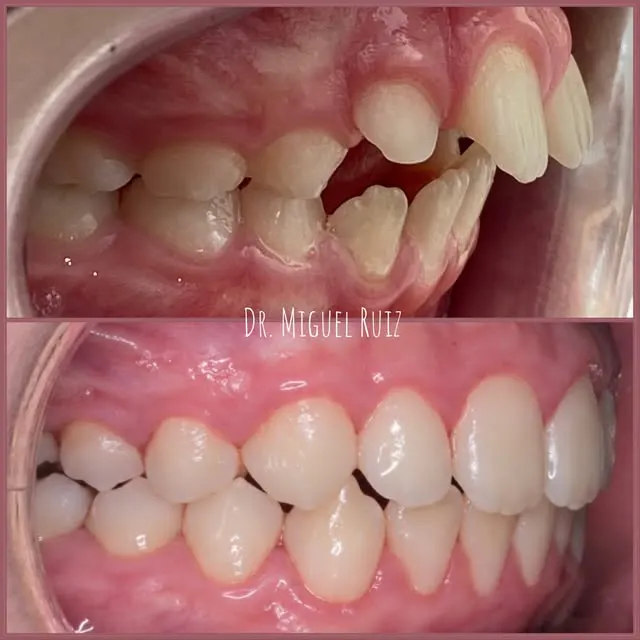
Lower jaw advancement at age 10
Top before, bottom after
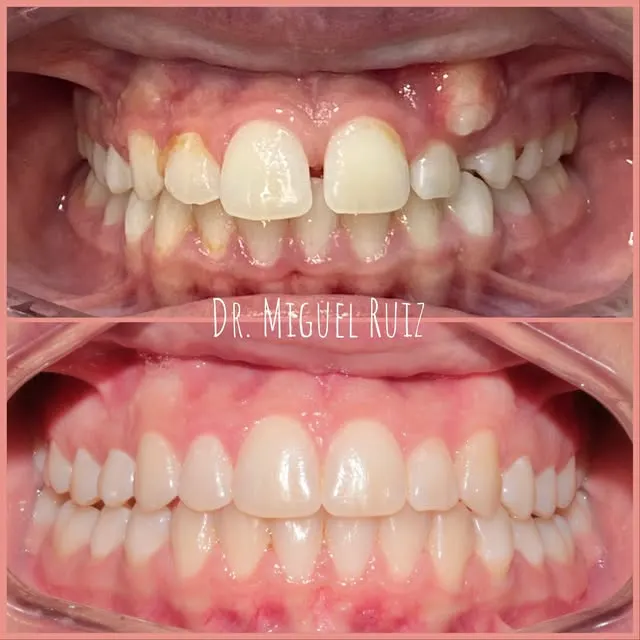
Regaining lost space
Top before, bottom after
Important information
What you should know
Invisalign First has few complications, but it is worth knowing them before you start:
- Discomfort or pressure on the teeth during the first days of each aligner.
- If your child does not wear them for the recommended time, treatment takes longer or the result changes.
- It is easy to lose an aligner away from home, which is why the case is important.
- Higher risk of decay if they eat or have sugary drinks with the aligners in.
- Some children need a second phase of orthodontic treatment once all their permanent teeth have come through.
Dr Ruiz will go through them with you at the first visit and they will be included in the informed consent.
Common questions
Frequently asked questions
At what age can treatment start?
Usually from age 6, when the child has baby teeth and the permanent ones are starting to come through. At the first visit the doctor assesses whether it is the right time.
Will it hurt?
It does not usually hurt. It is normal to feel pressure during the first days of each new aligner.
Can they wear it at school?
Yes. It is almost invisible and does not affect speech after the first few days. They only need to take it out to eat.
What if they lose or break an aligner?
Let the clinic know. Depending on the stage of treatment, they move to the next aligner, go back to the previous one or a new one is made.
Will they need more orthodontics later?
It depends on each child. Some need nothing else and others have a second phase, usually simpler, once all their permanent teeth have come through.
Can they play sport with the aligners?
Yes. For contact sports the doctor will tell you whether a mouthguard is also advisable.
How much does Invisalign First cost?
It depends on what your son or daughter needs. At the first visit we give you a no-obligation quote.

Your child's orthodontist
Dr Miguel Ruiz
Orthodontist in Madrid, focused on clear aligner orthodontics for adults and children. He sees your son or daughter personally at the first visit, during treatment and at every check-up.
“Architect of smiles”
Consultations at Príncipe de Vergara 97, Madrid