Clear aligner orthodontics in Madrid
Invisalign for adults
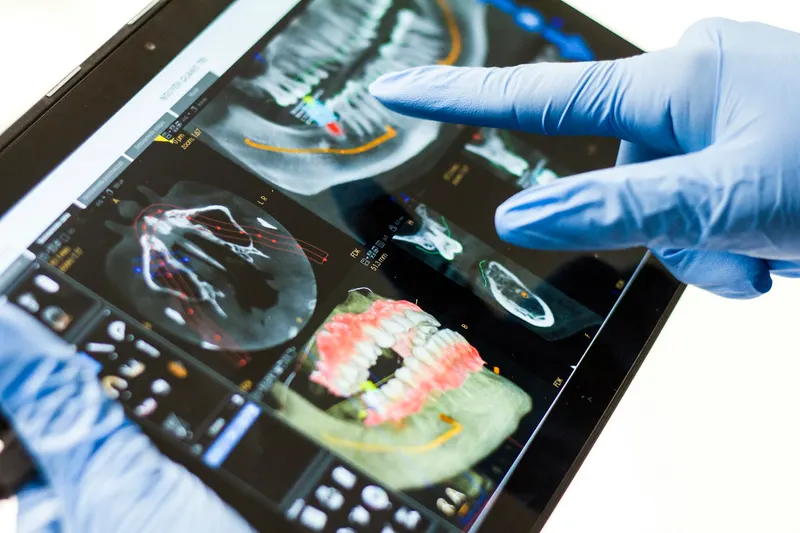
Straighten your teeth with clear aligners that are almost invisible and that you take out to eat. Dr Ruiz examines your mouth with the iTero scanner and shows you the expected result before you start.

Duration
Between 6 and 24 months
Daily wear
About 22 hours
Aligners
New ones every 1 or 2 weeks
Check-ups
Every 6 to 10 weeks
Afterwards
Retainers
Approximate figures. They are confirmed at your first visit for each case.
The treatment
What does it involve?
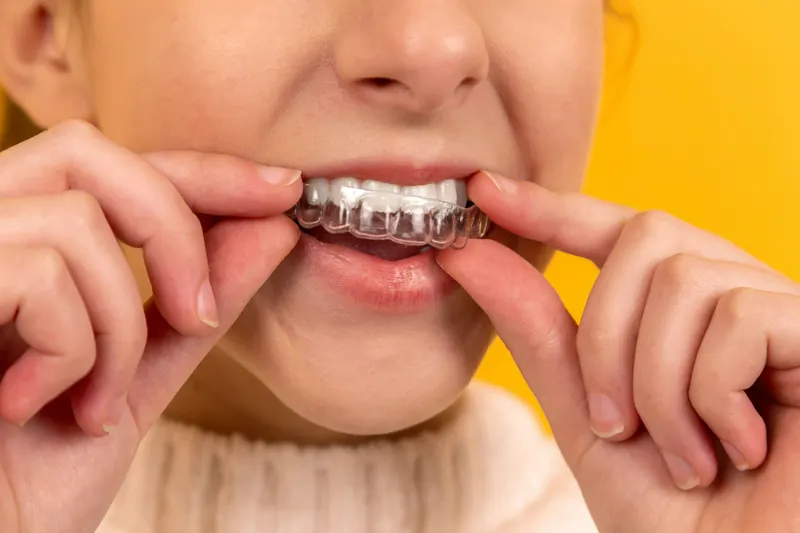
Invisalign is an orthodontic treatment with clear aligners made to measure from a 3D scan of your mouth. Each aligner moves your teeth a little, and every one or two weeks you move on to the next one in the series until they reach the planned position.
Before anything is made, Dr Ruiz plans the movement of each tooth in 3D software, from start to finish. To help the teeth move as planned, small tooth-coloured bumps called attachments are sometimes bonded on; they are removed at the end.
No moulds
Impressions are taken with the iTero intraoral scanner, which takes a few minutes and does not make you gag. With the same scan you see a simulation of how your smile will look.
Indications
Who is it for?
- Crowded or misaligned teeth.
- Gaps between the teeth (diastemas).
- Overbite, open bite or crossbite, depending on complexity.
- Teeth that have moved again after previous orthodontic treatment.
- Adults who want discreet orthodontics for their work or social life.
When it may not be the right option
If you cannot wear the aligners for about 22 hours a day, treatment will not progress as planned. Before starting, any decay or gum problems need to be treated. Some problems with the facial bones may require combining orthodontics with surgery; Dr Ruiz will tell you at the first visit.
Before you decide
Your first visit
No two mouths are treated the same. At your first visit Dr Ruiz sees you personally, without rushing, to understand what you would like to improve and whether Invisalign is right for you.
01
Listening
What you dislike about your smile, what you would like to change and what your daily life is like.
02
Scanning
Examination of teeth, gums and bite, a 3D scan with iTero and, if needed, an X-ray.
03
Seeing the result
An on-screen simulation of the expected result and of how your teeth will move.
04
Deciding calmly
You take home the plan, the estimated duration and a no-obligation quote.


Your first visit uses the iTero scanner by Align Technology, the company that makes Invisalign.
During treatment
The treatment, step by step
Start
Fitting
Attachments are placed if your case needs them, and you receive your first aligners with instructions for use.
Every 1 or 2 weeks
Aligner change
You move on to the next aligner in the series at home, following the schedule the doctor gives you.
Every 6 to 10 weeks
Check-up
Dr Ruiz checks that your teeth are moving as planned and gives you the next aligners.
If needed
Final adjustment
In some cases a new scan and a short series of aligners are used to fine-tune the result.
At the end
Retention
The attachments are removed and retainers are fitted to keep your teeth in their new position.
Your daily life
What wearing Invisalign is like
First days
Getting used to it
You will feel pressure on your teeth with each new aligner and perhaps a slight change in your speech. It usually passes within two or three days.
At every meal
Take them out
You eat and drink whatever you like without them. Before putting them back in, you brush your teeth.
Every day
Cleaning
The aligners are cleaned with cold water and a soft brush. You can drink plain water while wearing them.
Special occasions
Flexibility
If you have an important event, you can take them out for a few hours. What matters is wearing them for about 22 hours a day.
Comparison
Invisalign and braces: what changes
Both options straighten teeth. The difference is how you live through the months of treatment.
| Braces | Invisalign | |
|---|---|---|
| Appearance | Visible, except ceramic or lingual ones. | Clear, almost unnoticeable. |
| Food | You have to avoid hard or sticky food. | You take them out and eat normally. |
| Hygiene | Harder; you need special brushes. | You brush and floss as usual. |
| Comfort | Metal parts can rub. | Smooth plastic, no wires. |
| Commitment | Fixed: they work without you having to remember. | They work if you wear them about 22 hours a day. |
Results
Real cases by Dr Ruiz
Photos of patients published with their permission, with the same framing before and after.
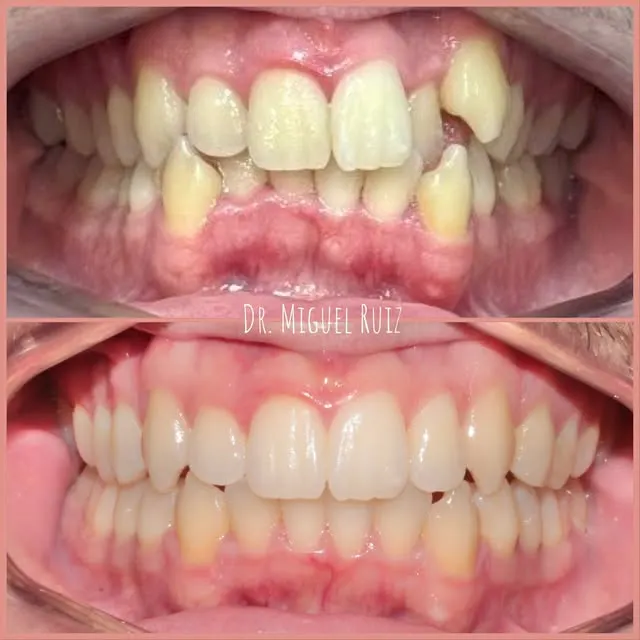
14 months of Invisalign
Top before, bottom after
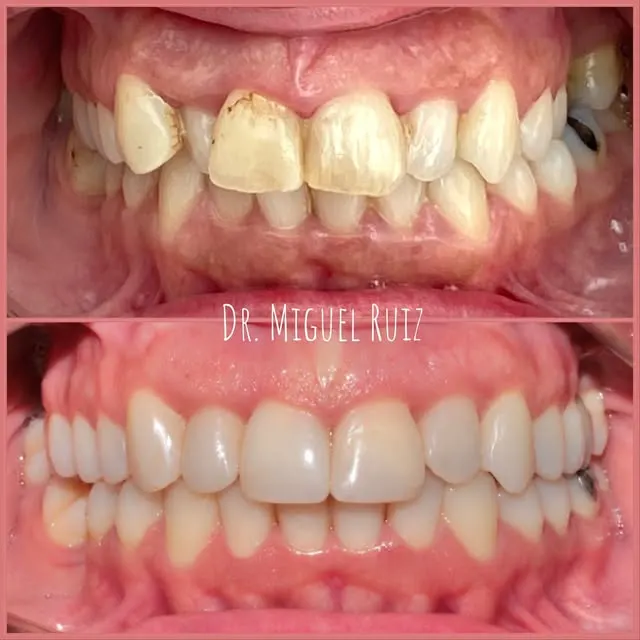
Expansion and veneers
Top before, bottom after
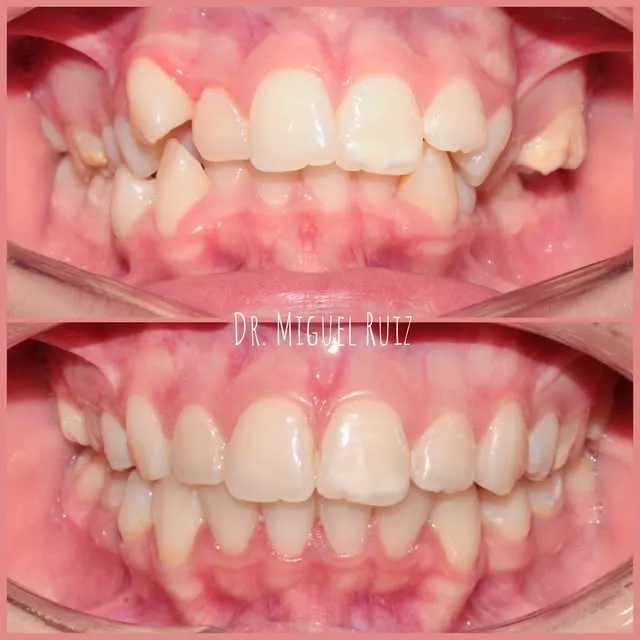
Alignment and expansion
Top before, bottom after
Important information
What you should know
Invisalign has few complications, but it is worth knowing them before you start:
- Discomfort or pressure on the teeth during the first days of each aligner.
- Mild irritation of the gums, tongue or cheeks from an aligner edge.
- If you do not wear them for the recommended time, treatment takes longer or the result changes.
- Higher risk of decay if you eat or have sugary drinks with the aligners in.
- Shortening of the roots of a tooth, which is rare, as with any orthodontic treatment.
- Teeth tend to move back if you do not wear your retainers.
Dr Ruiz will go through them with you at the first visit and they will be included in the informed consent.
Common questions
Frequently asked questions
Does Invisalign hurt?
It does not usually hurt. It is normal to feel pressure during the first days of each aligner, which is a sign that your teeth are moving.
Does it affect speech?
In the first days you may notice a slight change when pronouncing some sounds. Most patients adapt within a few days.
How much does Invisalign for adults cost in Madrid?
It depends on how complex your case is and how many aligners you need. At the first visit Dr Ruiz gives you a no-obligation quote.
How long does treatment take?
Usually between 6 and 24 months, depending on each case. With the iTero scan you will know the estimated duration from the start.
Can I eat and drink with the aligners in?
You take them out to eat. While wearing them it is best to drink only water; sugary or coloured drinks can stain the aligners and encourage decay.
What if I lose or break an aligner?
Let the clinic know. Depending on the stage of treatment, you move to the next aligner, go back to the previous one or a new one is made.
Will I need retainers?
Yes. At the end, retainers keep your teeth in their new position. The doctor will tell you which ones and for how long.

Your orthodontist
Dr Miguel Ruiz
Orthodontist in Madrid, focused on Invisalign clear aligner treatment for adults and children. He sees you personally at your first visit, during treatment and at every check-up.
“Architect of smiles”
Consultations at Príncipe de Vergara 97, Madrid